

Hot Joy
Art Nouveau in 16th century Spain? Salamanca's secret treasure.

Yet, hidden within this ancient university town is another gem of a destination: the very 20th century Museo Art Nouveau y Art Deco.
Now there is a whiff of snobbery about art nouveau, a belief it is artifice over substance, which has relegated this short-lived movement to the status of unloved middle child, stuck between the passionate revisionism of the Arts & Crafts Movement and the cooler futurism of Art Deco.
The Museo Art Nouveau et Art Deco highlights all that is right about the movement. Because entwined within the foliage of art nouveau’s signature shapes lies a delicate and beautiful sensibility - innocent, round-eyed and full of questions, a bit like that willowy aunt who insists on dancing, semi-naked, at sunrise on the balcony…..

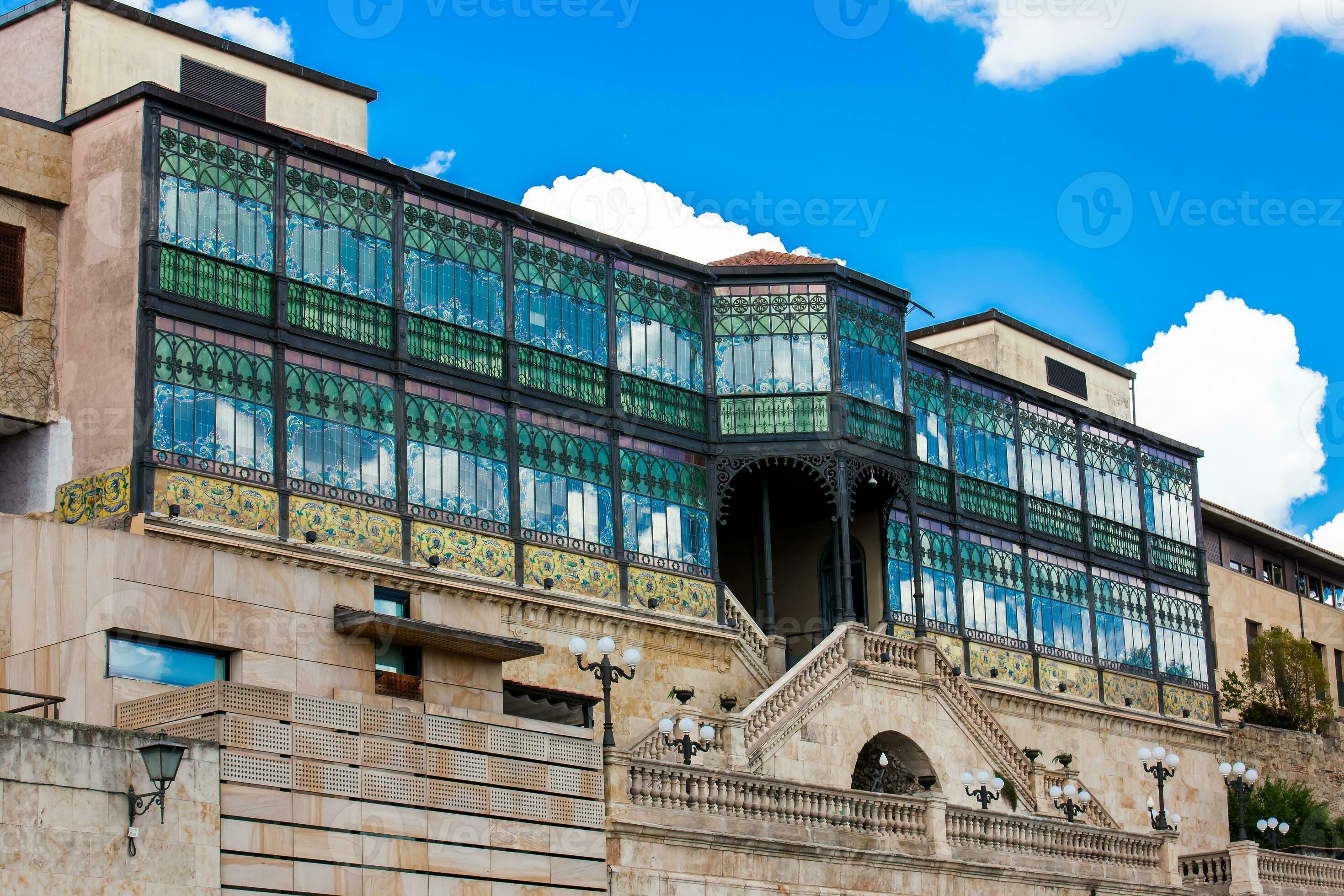
The museum building itself is a work of nouveau arts in its own right, a palacio built by the wealthy turn-of-the century industrialist-merchant Don Miguel de Lis. Everything, inside and out - contents, decor, every nook and cranny, even the door architraves - all is art nouveau. A mad commitment to one specific sensibility (and evidence yet again that private obsession beats public arts council for originality).
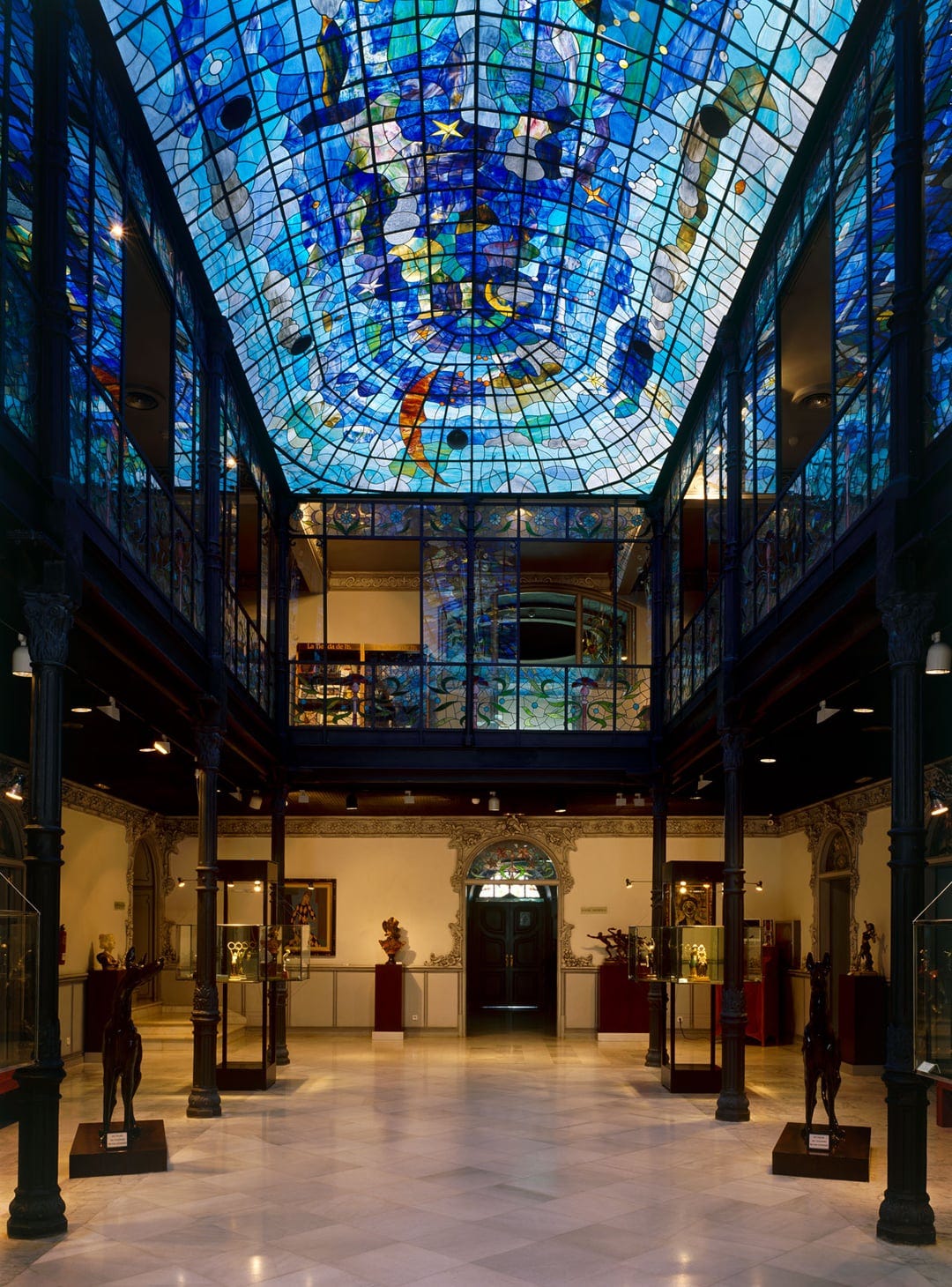
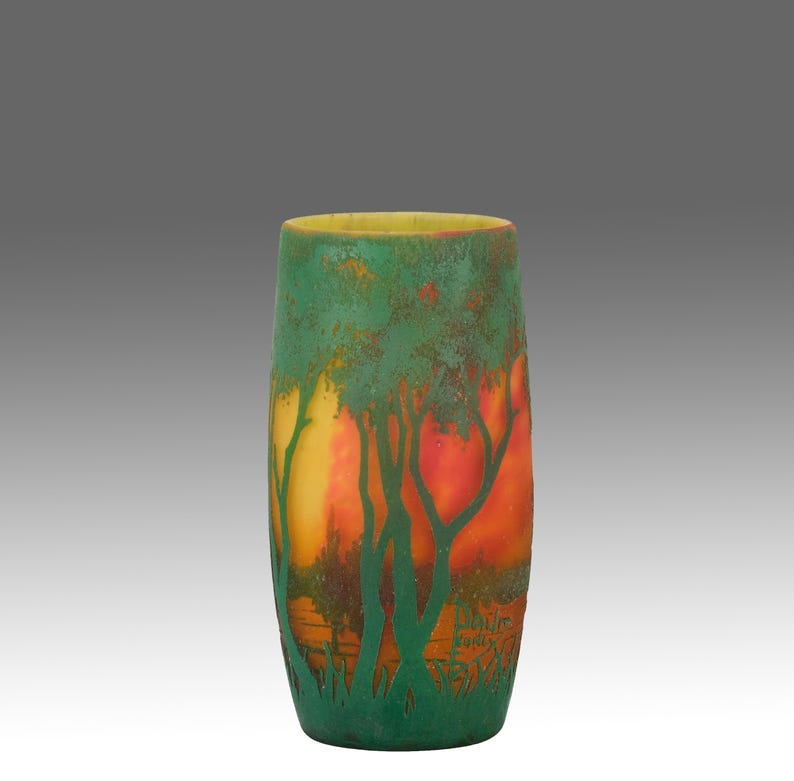
Step into the opening double-height atrium and be dazzled by a sun-gorged multi-coloured glass ceiling held high by decorated wrought iron pillars. From here it is one room after another packed with a never-ending collection of fabulous art nouveau trophies - fantastic lighting by Nancy School masters like Émile Gallé and the Daum brothers - here’s a sample of their glassware….


….to the (slightly creepy) bronze and ivory figurines of dancers known as chryselephantine, from the likes of Demetre Chiparus and Ferdinand Preiss….

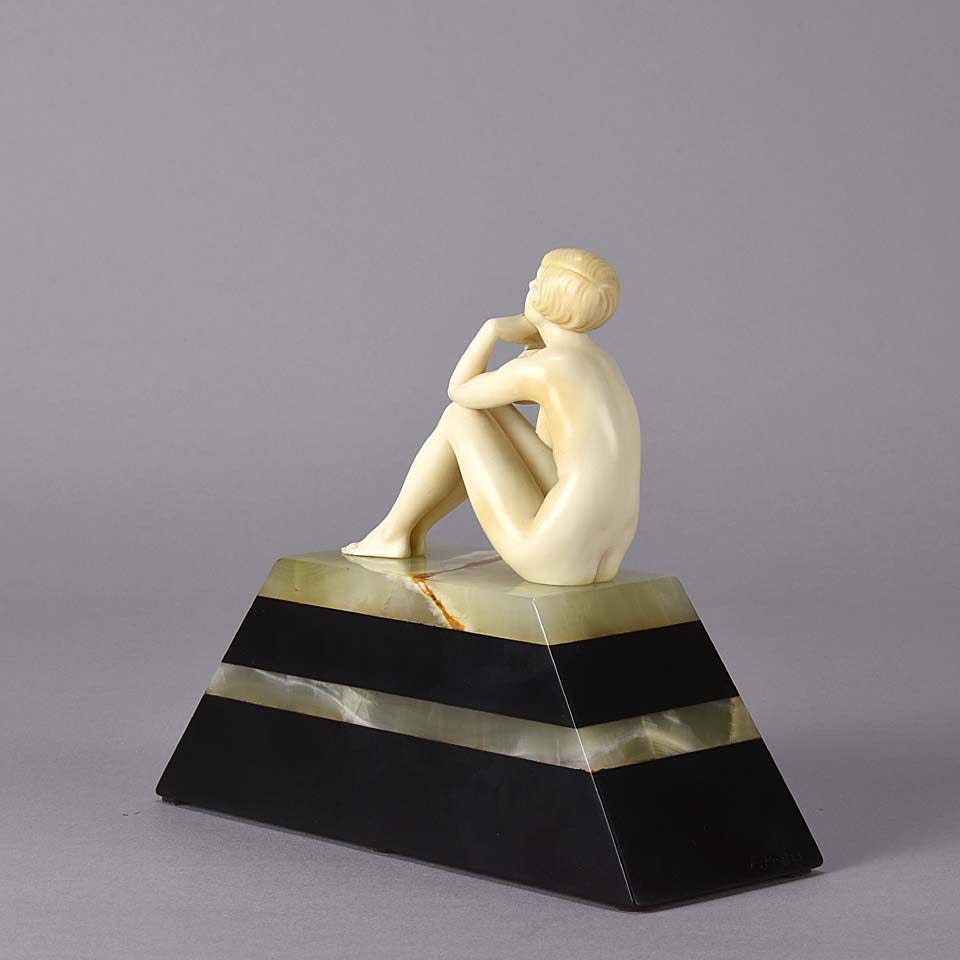
….and on to glittering jewellery, twinkling enamels, stunning ceramics and glassware (there are shelves of Lalique, cabinets-full of fans, perfume bottles and object d’arts), as well as a smattering of paintings, all art nouveau period.

There are some oddities - I am not a fan of the room full of weird French dolls (mis-shapen little Marie Antoinettes with glaring eyes and lipstick-smeared mouths - no thanks). Nor do I like the cabinets full of unpleasant bisque and glazed porcelain figurines. They are supposed to represent caricatures of standard characters but are just ugly. Give those rooms a swerve.
Instead recover in the rooms which showcase Don Miguel de Lis’s own art nouveau furnitured living and dining rooms - they still feel like Don Miguel and his lady-wife might be using them when the visitors leave….

…before nipping into the wonderfully atmospheric art nouveau cafe at the back of the museum for a coffee and cake before wandering back out into the 16th century of old-town Salamanca.

Museo de Arts Nouveau e Art Deco is a love letter to a movement that has suffered from being too decorative for the modernists and too modern for the classicists. But there is real artistry here as well as fine craftsmanship, and Casa Lis is well worth the visit.
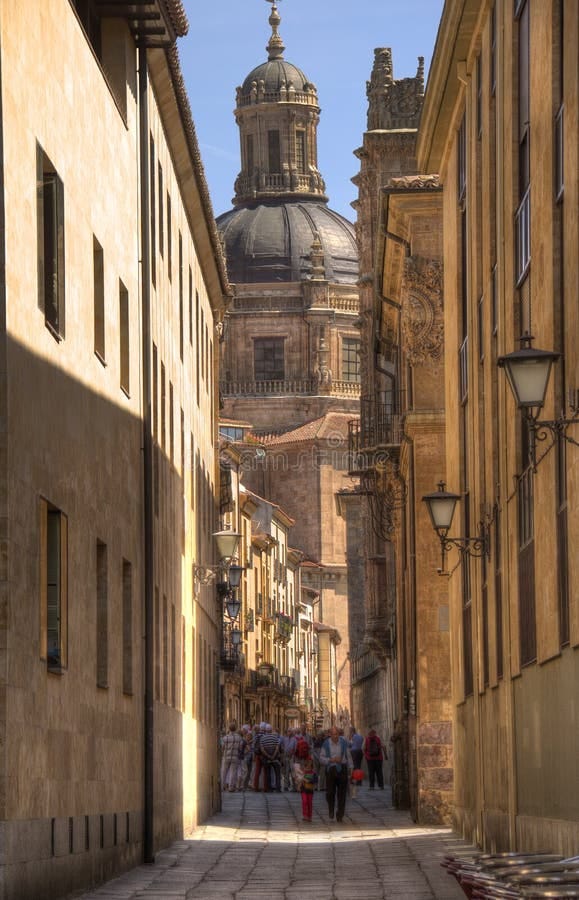
Finally, a quick word, if you can spare the time, in praise of Salamanca itself. What a stunning little city! Central Salamanca is a jumble of 16th and 17th century red-stone housing one of the oldest universities in the world and the humungously huge (and weirdly stuck together, like medieval Lego) Cathedrals Alte and Nouvo (with its 300-foot tall bell tower, the largest in Spain).

So if you like turrets and churches….fill your boots.

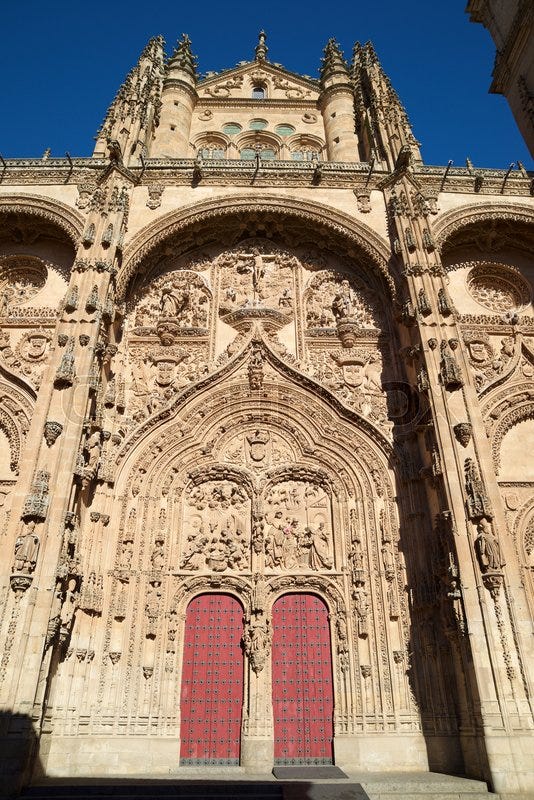
It is famed for the astonishing stone carvings that adorn the front of its church and university buildings, depicting all manner of religious iconography (the Reformation didn’t make it here, thank the Lord (sic)).
The style is called Plateresque, meaning “in the manner of a silversmith”, and the intricacy of the stone masonry has to be seen to be believed. It is - in a word - obsessive!

There is also a huge square with an almost perfectly symmetrical surround of three-storey apartments and administration quarters; Roman walls and a stone multi-arched bridge; and at least half a dozen smaller churches as well as a multitude of clergical and scholarly buildings all dating from between 1200 and 1750 and all built pretty much out of the same warm skin-toned stone masonry.
All enveloped in 30C+ heat. What is not to like? Go see.


Que bueno!
Looks stunning Richard. I am not ashamed to say that I love a bit of Art Nouveau.