

Narco Art
Beatriz Gonzalez (Barbican Centre, London)


Beatriz González spent her entire career using humour and critique to hold up a mirror to social constructs about taste, all while laying bare the ongoing legacies of colonialism by way of found images from the western canon and tattered newspaper clippings focusing on power and conflict.
This link between formal painting and widely held traditions propelled González to become one of the leading painters in neo figuración (new figuration) and what today is generally known as pop art. No for nothing is she refferred to in Colombia as ‘la Maestra’.

González studied fine arts at the Universidad de los Andes in Bogotá and print-making at the Rijksakademie van Beeldende Kunsten in Amsterdam. She first came to prominence when she exhibited her Encajeras [Lacemaker] series based on Johannes Vermeer’s famous painting. This series revealed what would reoccur in her oeuvre: a careful study of canonical paintings and an interest in colour blocking and saturated colours.
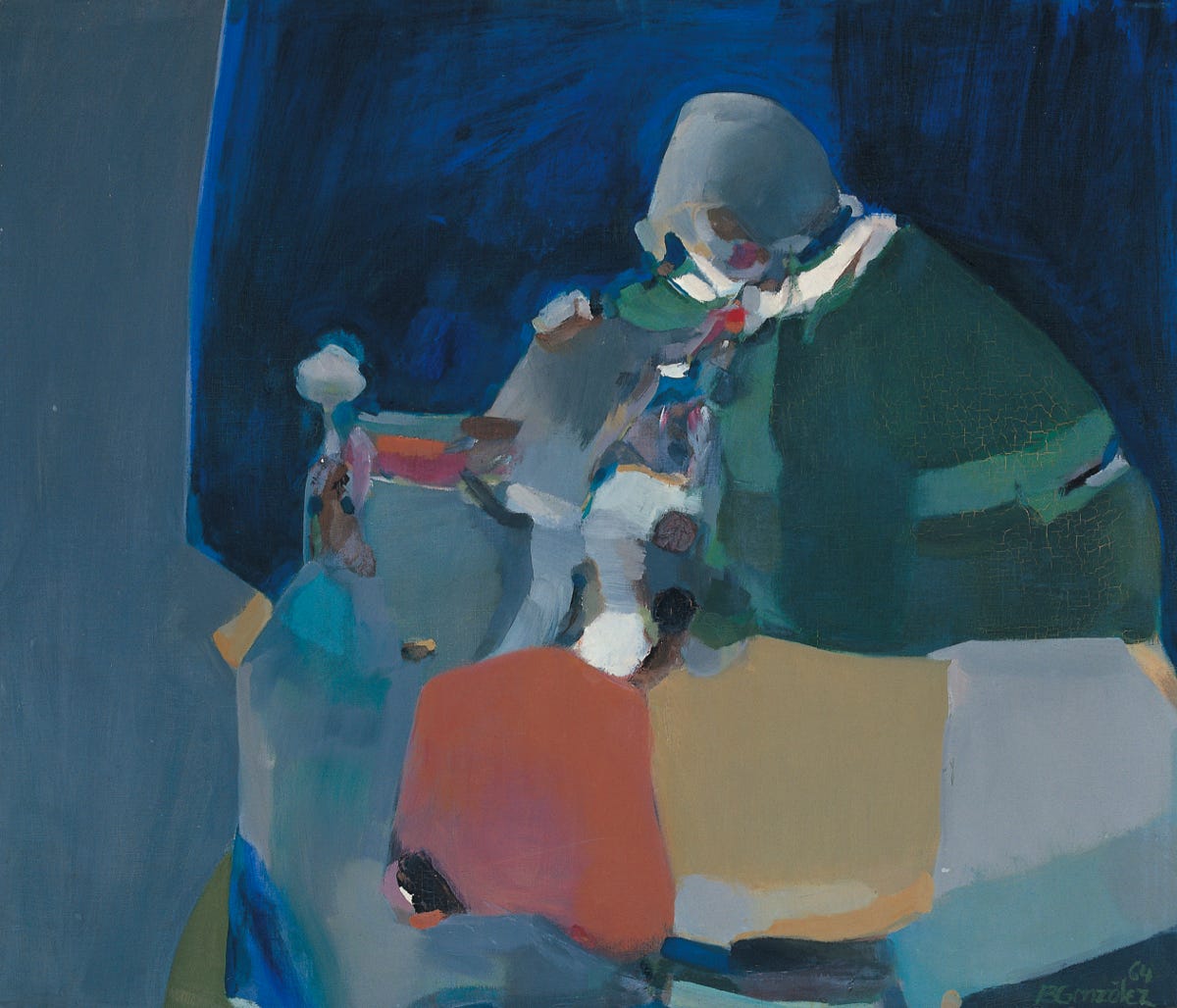
González also made Pop-Arty use of everyday household furniture in which to feature her art - enamelled pictures on metal plates form part of a bed or a chair or a bedside cupboard. I’d certainly wake up happy next to one of these earlier, and thought-provoking, works.
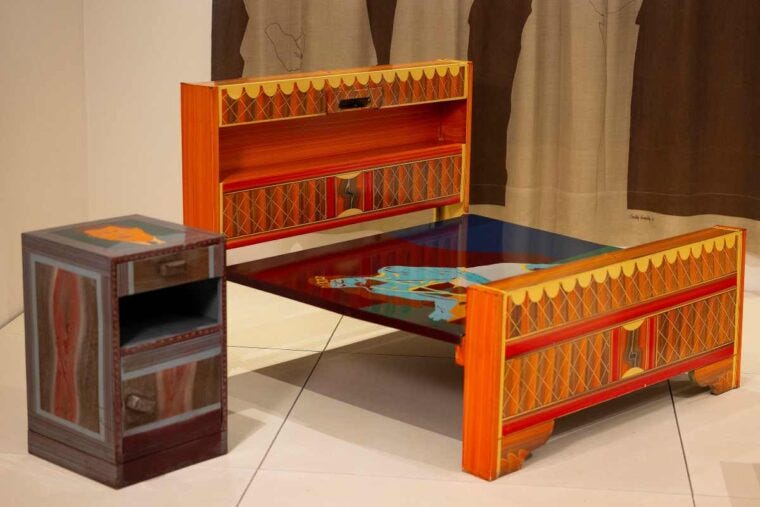
Her hallway mirror stand is particularly entertaining because every time one looks one expects a reflection, not an image of the Mona Lisa, thereby creating questions of who you are, how you look and so on.
I suppose it might be annoying if you’re trying to check out the size of your bum before you go out but that, sigh, is the price of art.
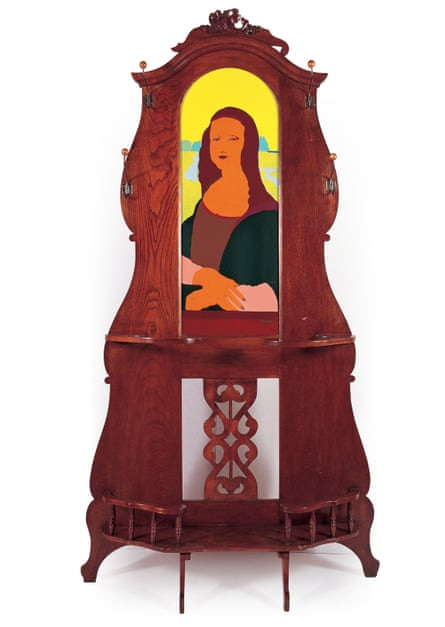
But despite being both admirer and critic of western art, copying and re-drawing specifically Vermeer and Velasco, she gradually became less playful and more serious in the face of increasing violence (this is Colombia in the 70s and 80s) and her art turned to politics and social commentary.

At first it was paintings like the 1965 series Los Suicidas del Sisga [The Suicides of Sisga] - inspired by a tabloid story about a young couple who committed suicide by throwing themselves over the Sisga Dam.
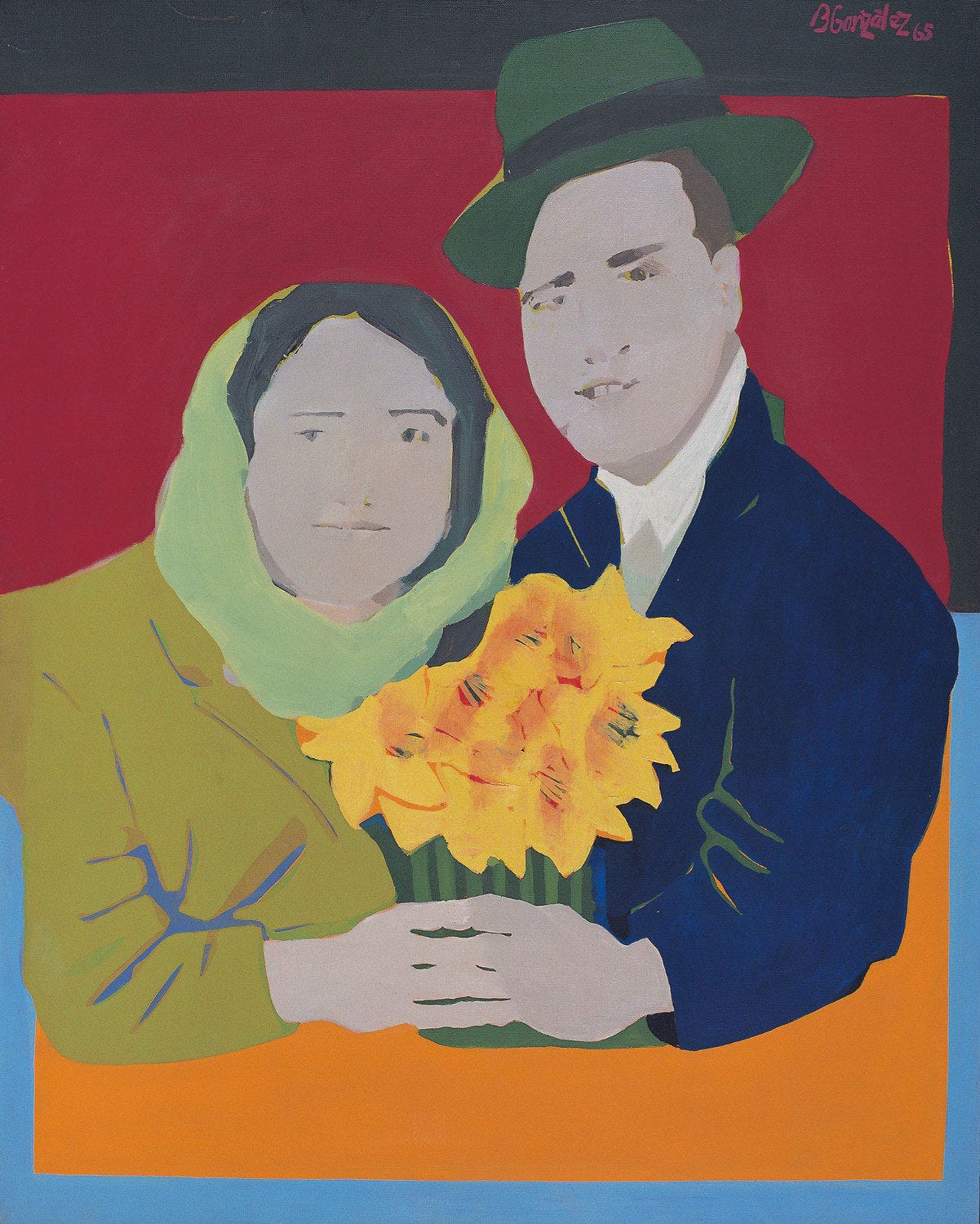
The second half of the show is increasingly focused González’s preoccupation with commentary on Colombia’s ruling military juntas - with pictures like this:
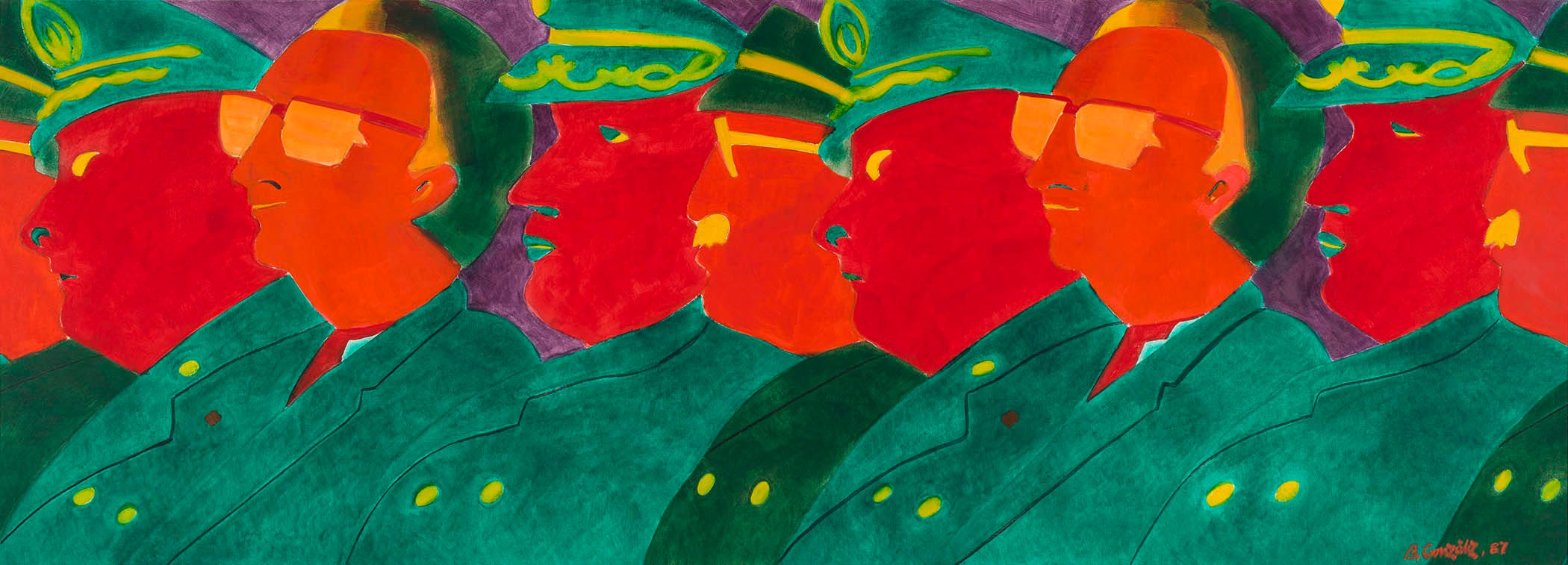
And then with the brutal narco violence that engulfed Colombia for 30 years from the 80s onwards.
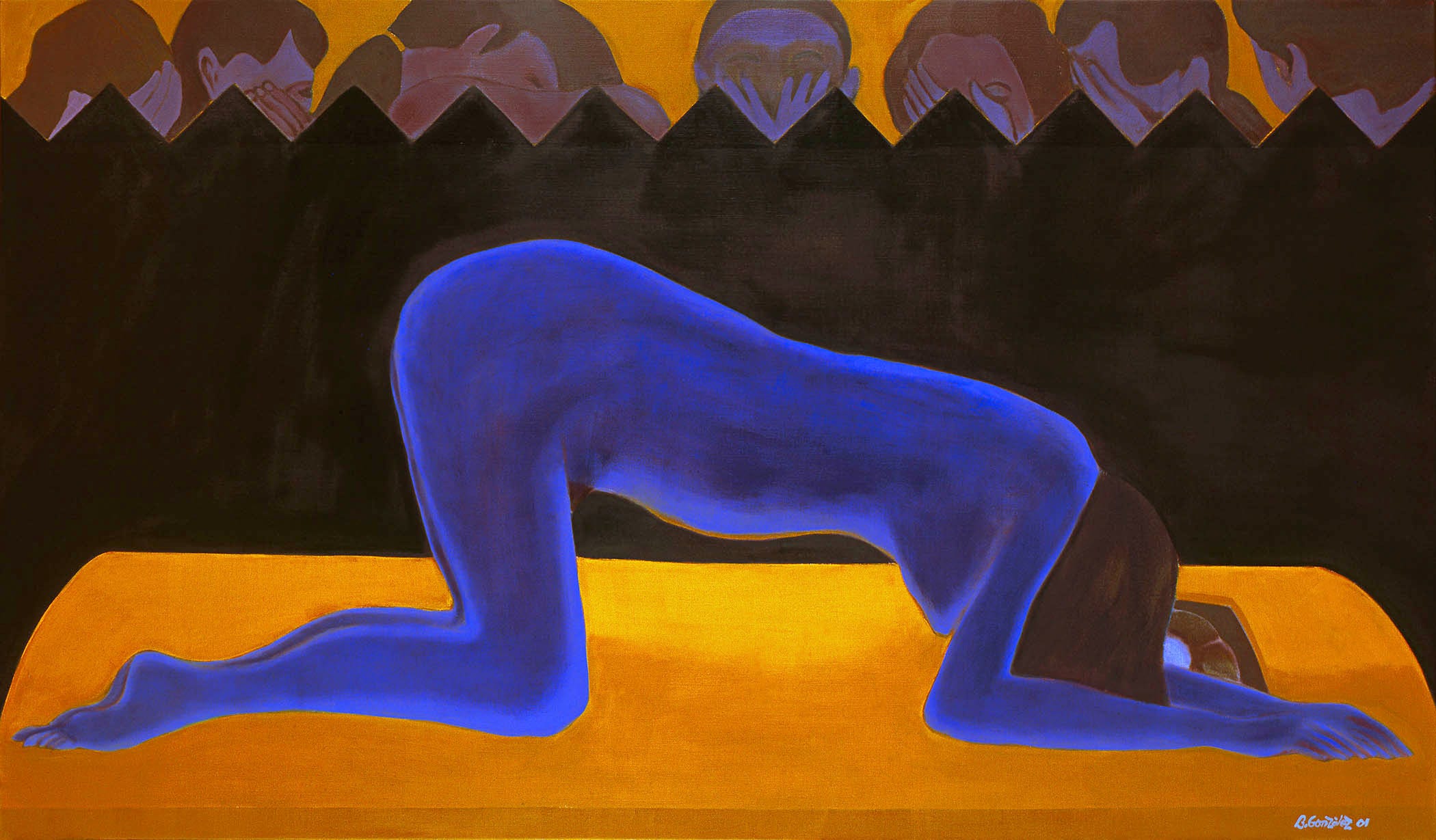
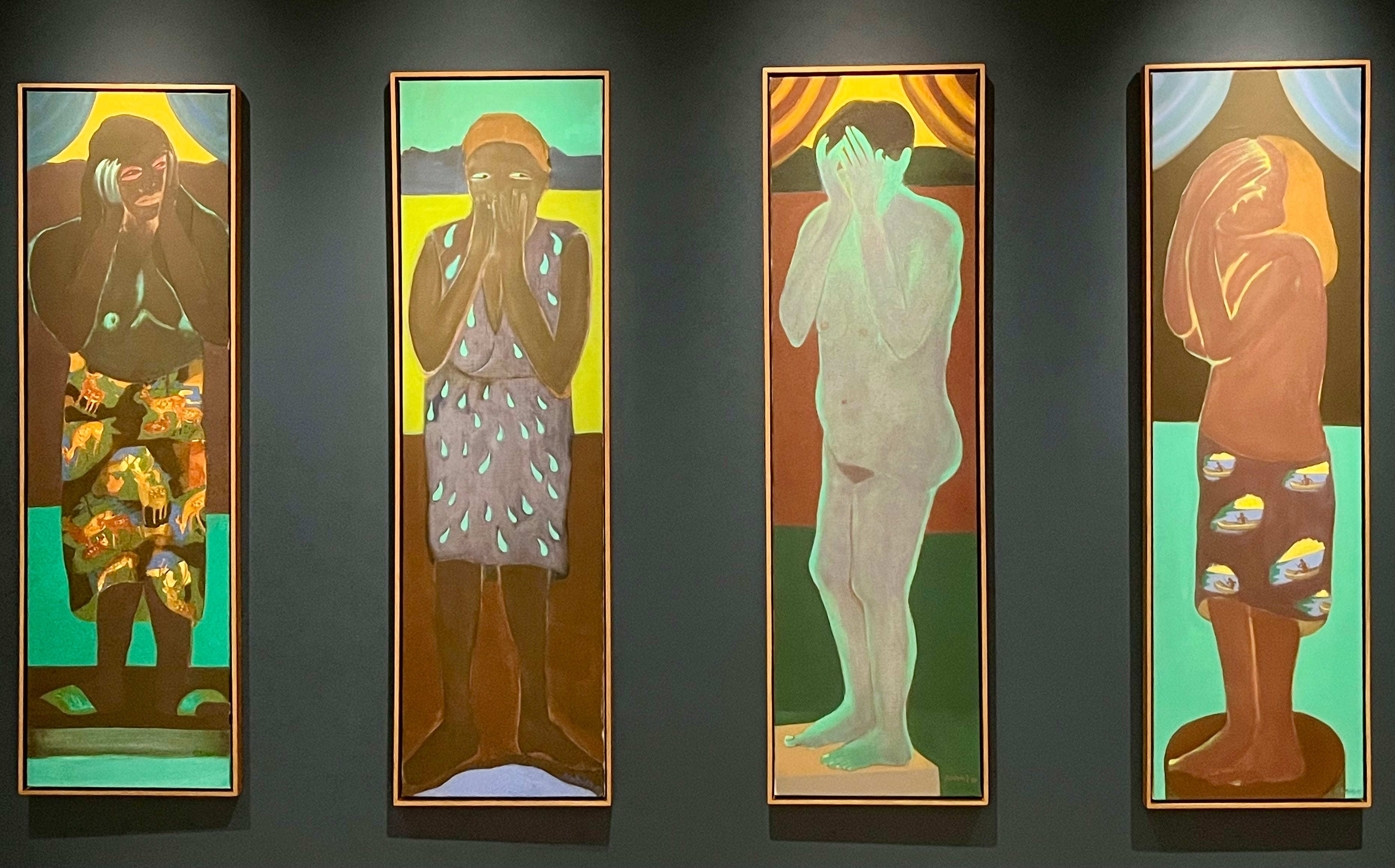
They are beautifully rendered - her use of colour is exquisite throughout - like these startling pictures of mourning women.
And by the end we had a wallpapered room adorned purely with her frame after frame depictions of porters disposing of bodybags - a reflection of the lack of a proper site for mourning the victims of the years of violence so the accompanying note says, or as González noted: “Art says things that history cannot.”

The themes are inevitable - violence is wrong, women mourn, climate change is hurting the poor. And it is, of course, good that a major artist makes protests because she was very visible - Colombia’s greatest living artist etc - but it makes the latter half of the exhibition thematically a little predictable.
Which is why, I guess, towards the end of her career Beatriz looked kinda down beat….
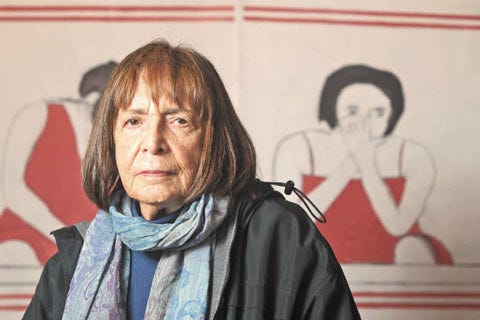
Beatriz González is not an artist I had heard of before this exhibition and it is to the Barbican’s credit that they have created a show that gives full coverage of her range and talents. Check it out.

