

Sweet Suffolk
Gainsborough, Turner & Constable: Inventing Landscape (Gainsborough's House, Sudbury, Suffolk) AND Constable 250: A Cast of Characters (Christchurch Mansion, Ipswich, Suffolk).


And that is why last month I spent a couple of days in Suffolk. Accompanied by charming film director and fashion icon Ian Denyer, I visited first Gainsborough’s House which is hosting an exhibition exploring how landscape paintings became realist rather than idealised; and then on to Christchurch Mansion in Ipswich, which is celebrating Constable’s (close-knit) family who were an integral part of Ipswich during the latter half of the 18th and first half of the 19th centuries.

Gainsborough’s House explores the emergence of landscape painting in Britain as led by Gainsborough (1727-88), Turner (1775-1851) and Constable (1776-1837).
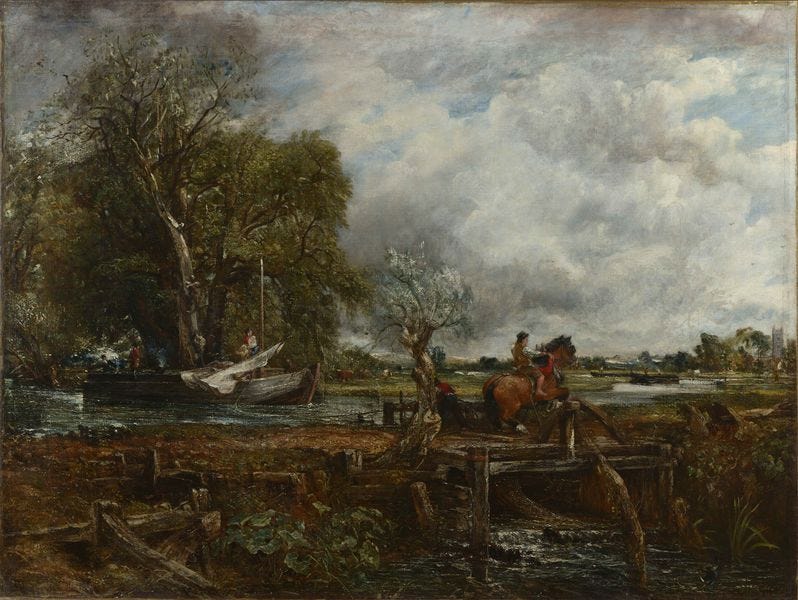
It’s biggest claim is showing off Constable’s masterly The Leaping Horse (above), the final and perhaps greatest of the series of ‘six-footer’ paintings painted between 1819 and 1825. Lucian Freud described it as ‘the greatest painting in the world, and saw all the related drawings and paintings as one work of art: ‘What is so mysterious about “The Leaping Horse” - paintings, drawings - is that they all work on one another.” IE - it is quality schmutter.
But for me the show stand-outs are the wondrous watercolours from the likes of yes, Turner, but also Alexander Cozens (1717-86), Francis Towne (1738-1816) and Thomas Girtin (1775-1802). They are all so fluid with colour and detail it seems like the images flow across the paper.
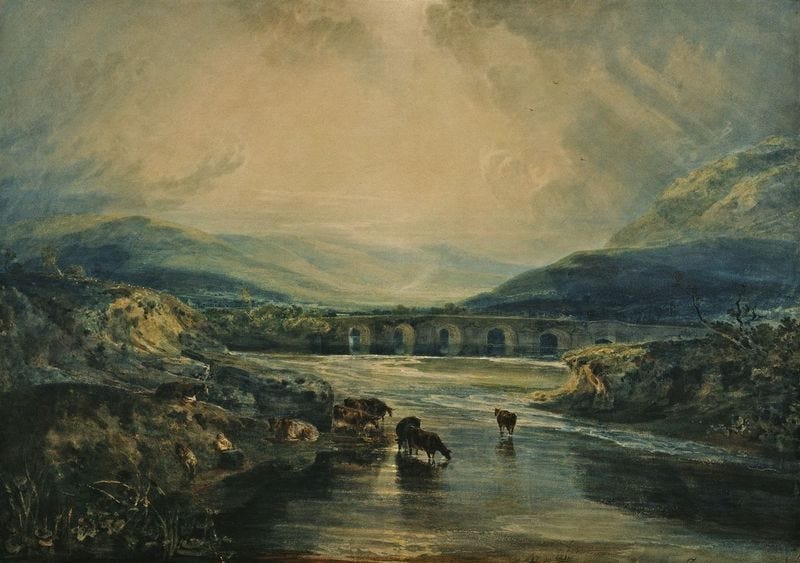
Turner’s sublime A Bridge over the Usk (1790s) - below- needs no introduction.
But work by Francis Towne, below, and John Glover, following on, merit close inspection.

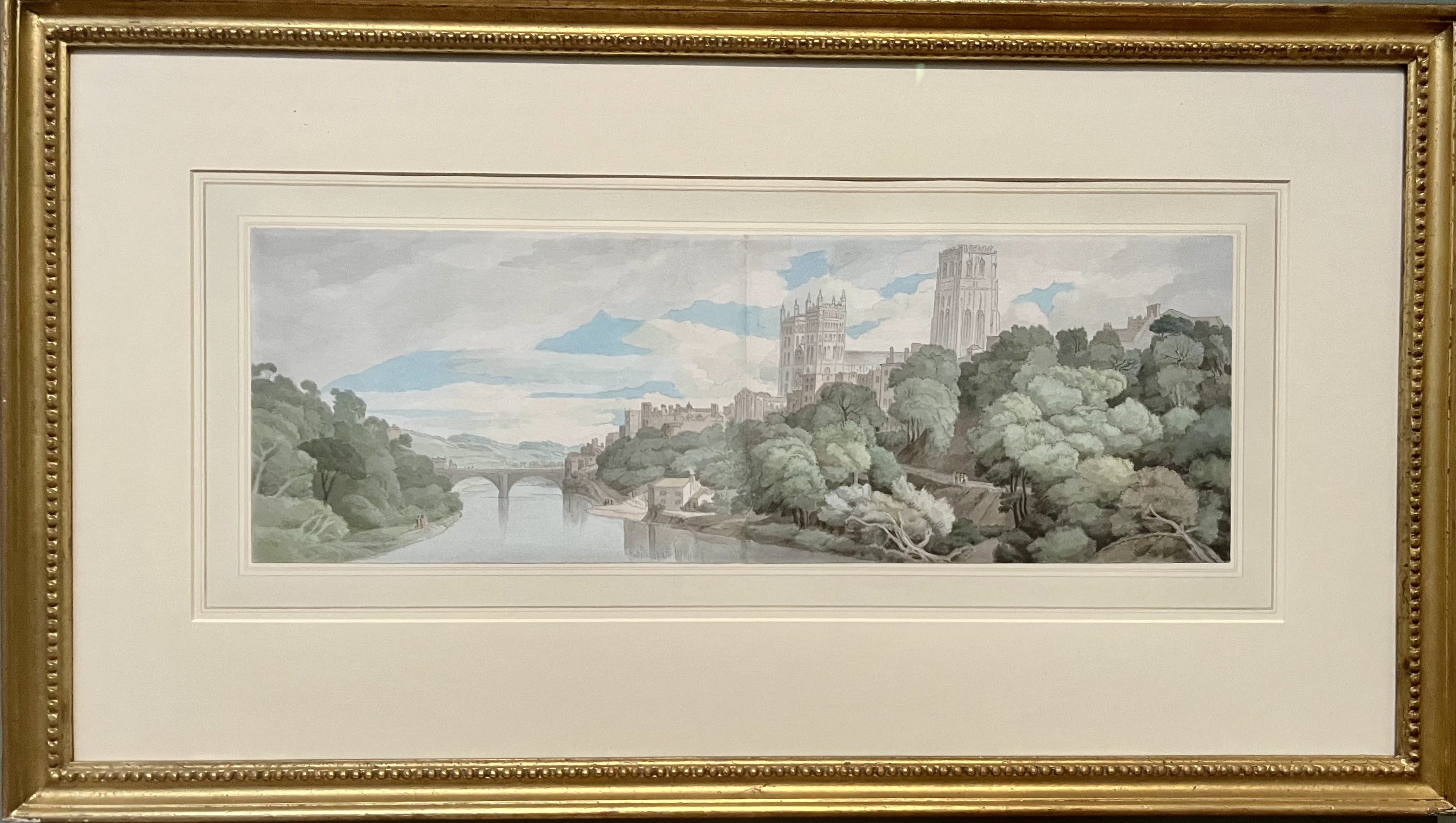
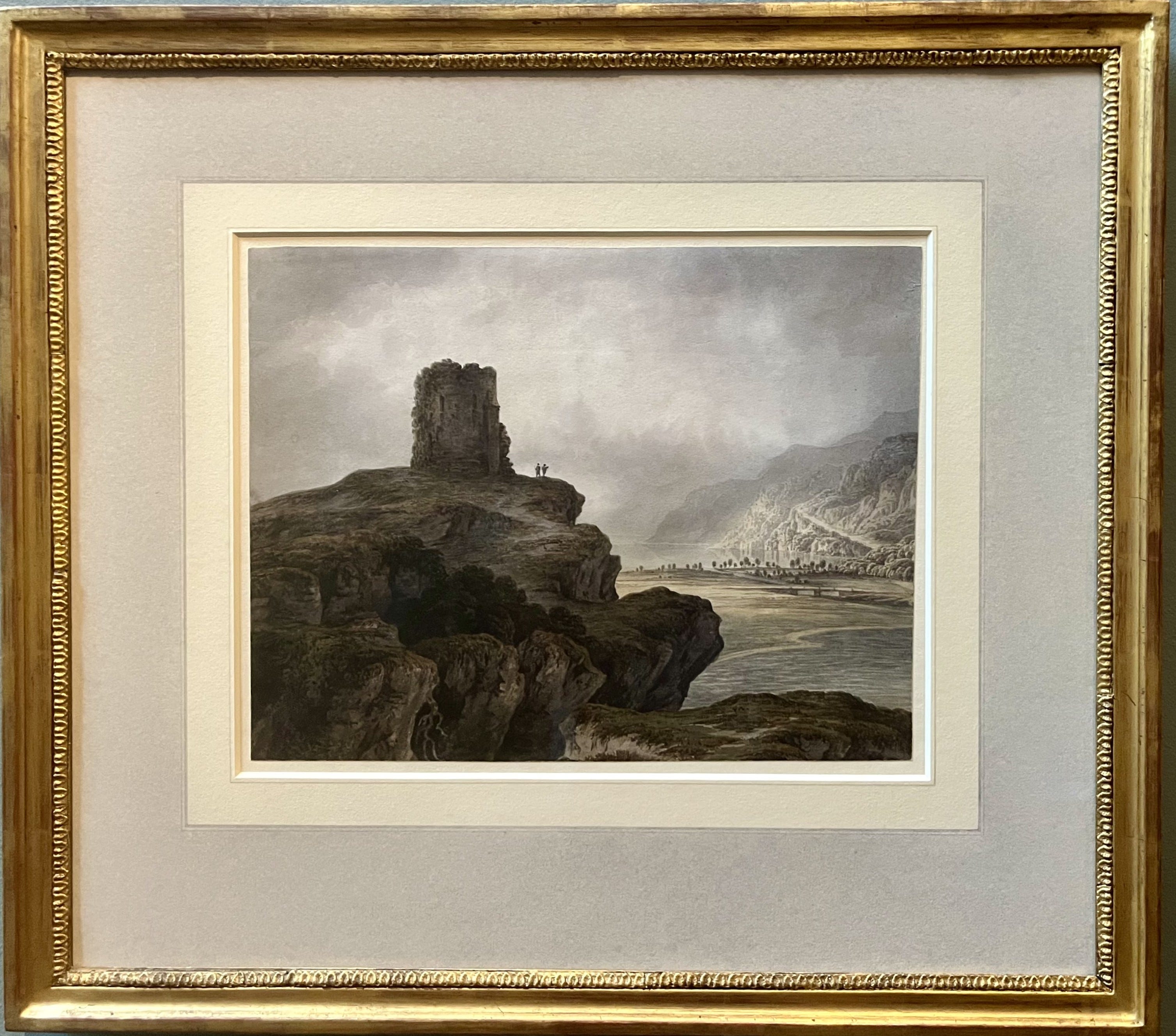
They are sumptuous examples of the great art that was achieved during what is (rightly) known as the Golden Age of Watercolours. The precision, the control, the intensity of detail : these pictures reward careful examination.
Constable’s own contribution is a lush, complex landscape that echoes Classical landscape pictures done in tones of black, brown and grey.
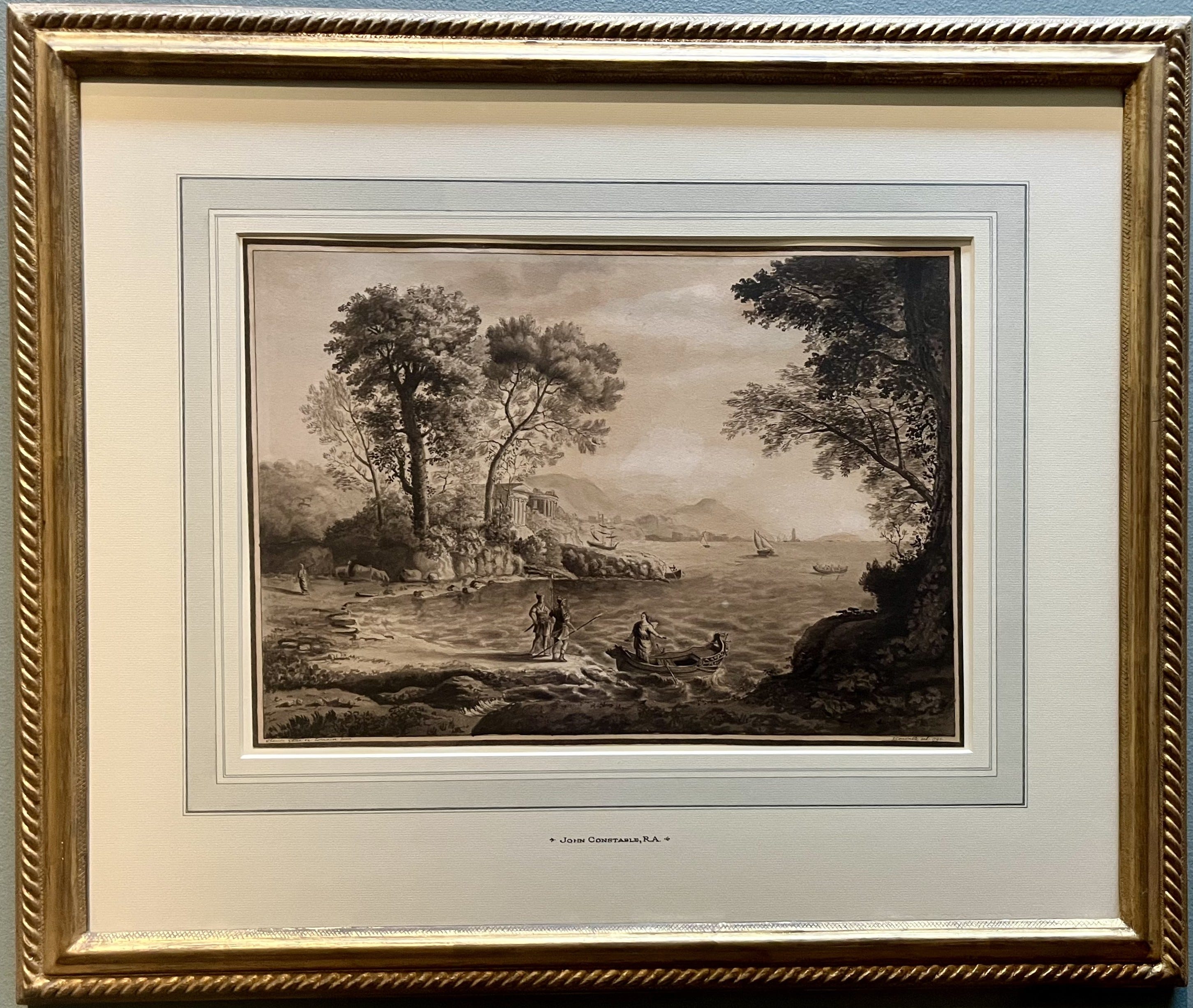
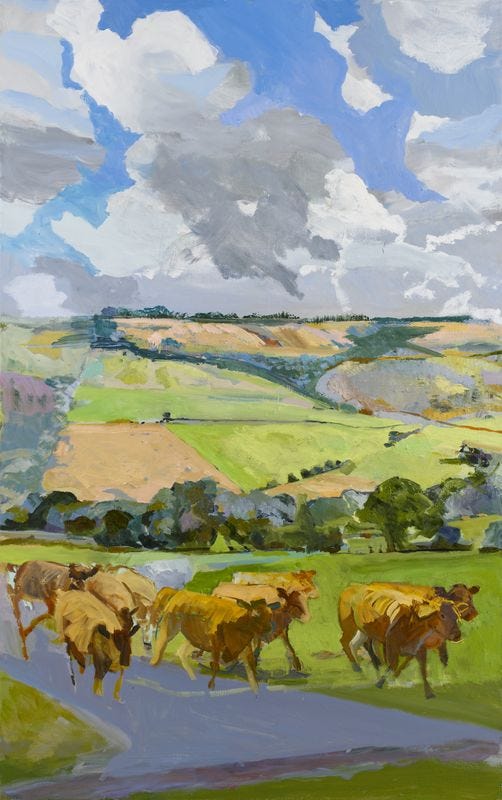
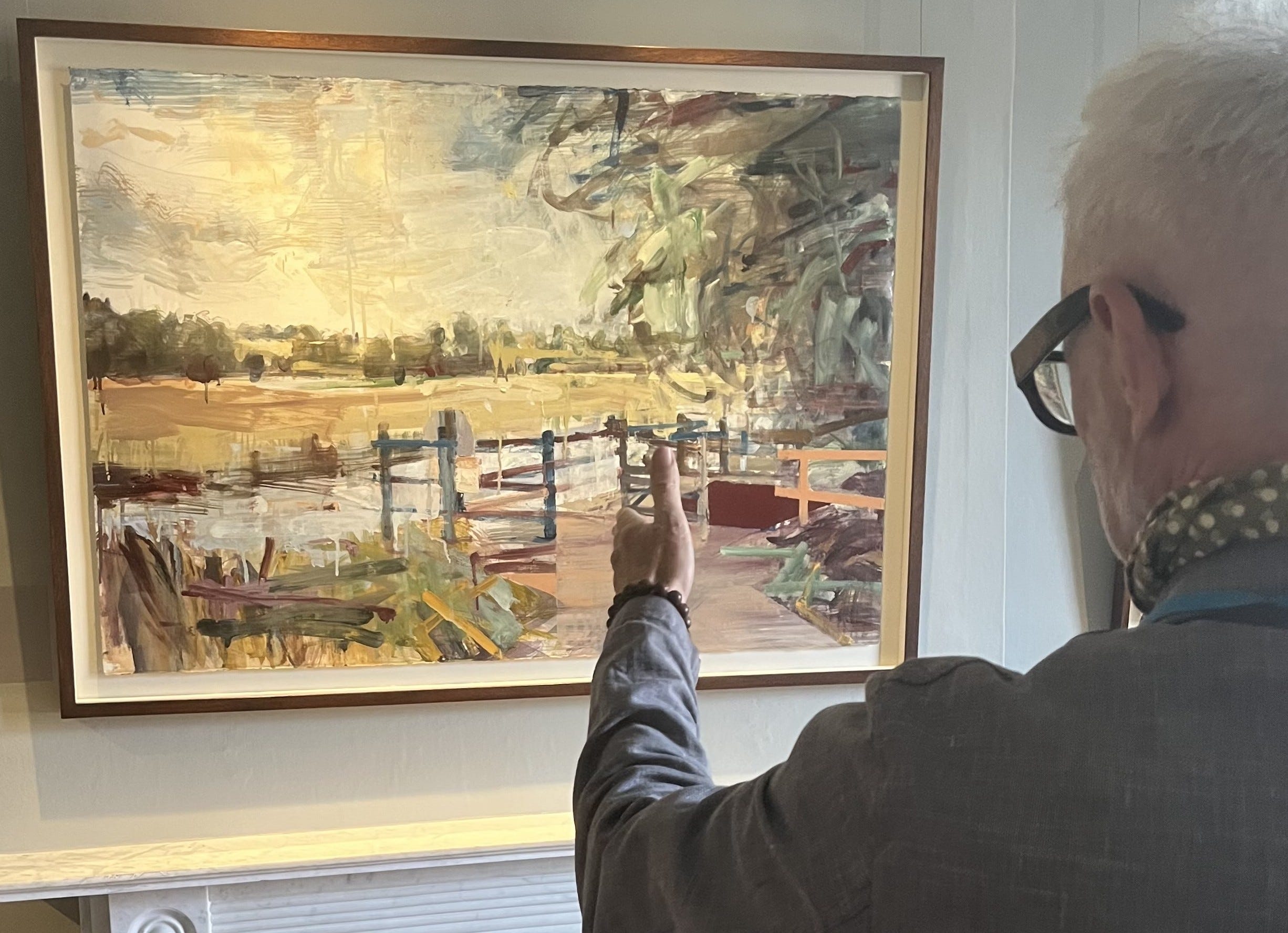
As ever there are two support acts complimenting the headliners. Firstly, offering contemporary reflections on landscape is a David Dawson show that I didn’t care a great deal for. Dawson is highly rated but it was a bit take-it-or-leave-it for me. All nicely painted by also, kind of, so what? Here’s an example of what I mean.
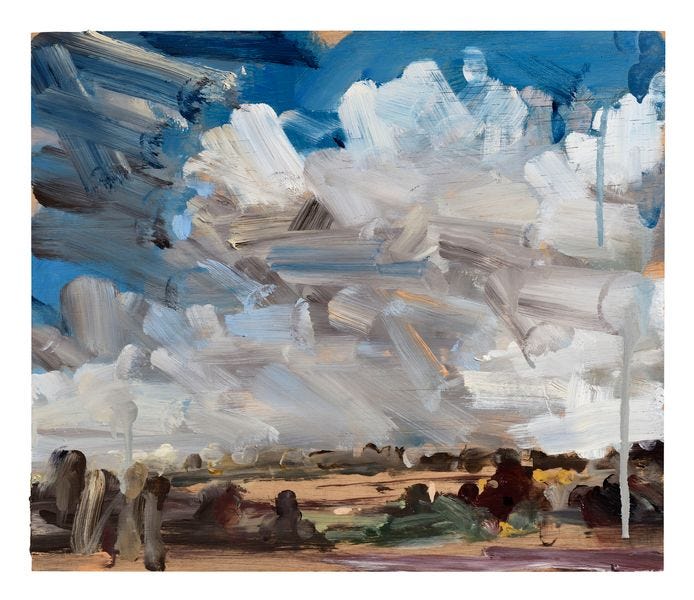
And then there were two rooms of Kate Giles’ work, much more vigorous and energetic, specifically drawing on the legacy of Constable. Her pictures are modern - noisy brushstrokes, paint trowelled on, impressionism to the point of abstraction.
But amongst the sturm und drang of her brushwork there is also distinctive features that speak of landscape and weather, and specifically, of movement.
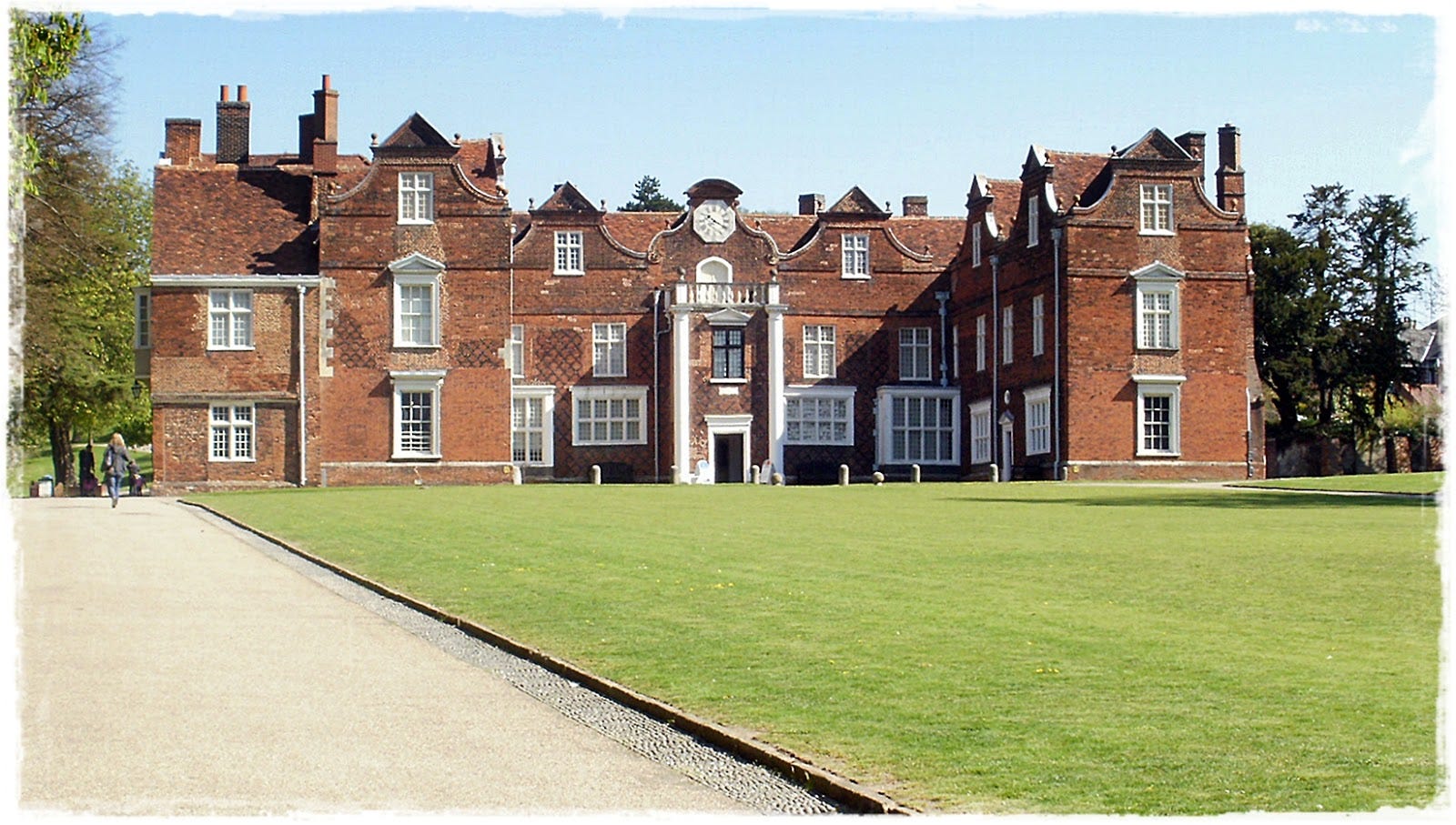
After Gainsborough’s House, it was off to Christchurch Mansion, in Ipswich, a 45-minute drive away.
The mansion is a Tudor-era building turned museum, featuring period rooms, original furnishings, and artworks by John Constable and Thomas Gainsborough. It is set in a lovely park, saved from Victorian developers and donated to the town by the Ipswich brewing dynasty, the Cobbold family (who also stewarded Ipswich football club, created the shipping port that is Felixstowe and provided the land for Ipswich racecourse. Lager louts? I don’t think so!)
Delightfully accompanied by curator Emma Roodhouse (thank you, Emma) a tour around Christchurch Mansion was like being shown round some aristo’s slightly rundown country house. I loved it.
The exhibition is called Constable 250: A Cast of Characters and it celebrates Constable’s close-knit family. It is a low-key sort of show, with pictures of mum and dad and (handsome - John himself was, er, no oil painting) brother, and a couple of portraits that Constable painted of local friends.

The highlight is two pictures painted with love and supreme care by Constable to mark and honour the death of his beloved mother, Ann. They are a specific views of her garden from the family house windows and Constable painted the views as the family was selling the house on her death. Here’s one of them…..
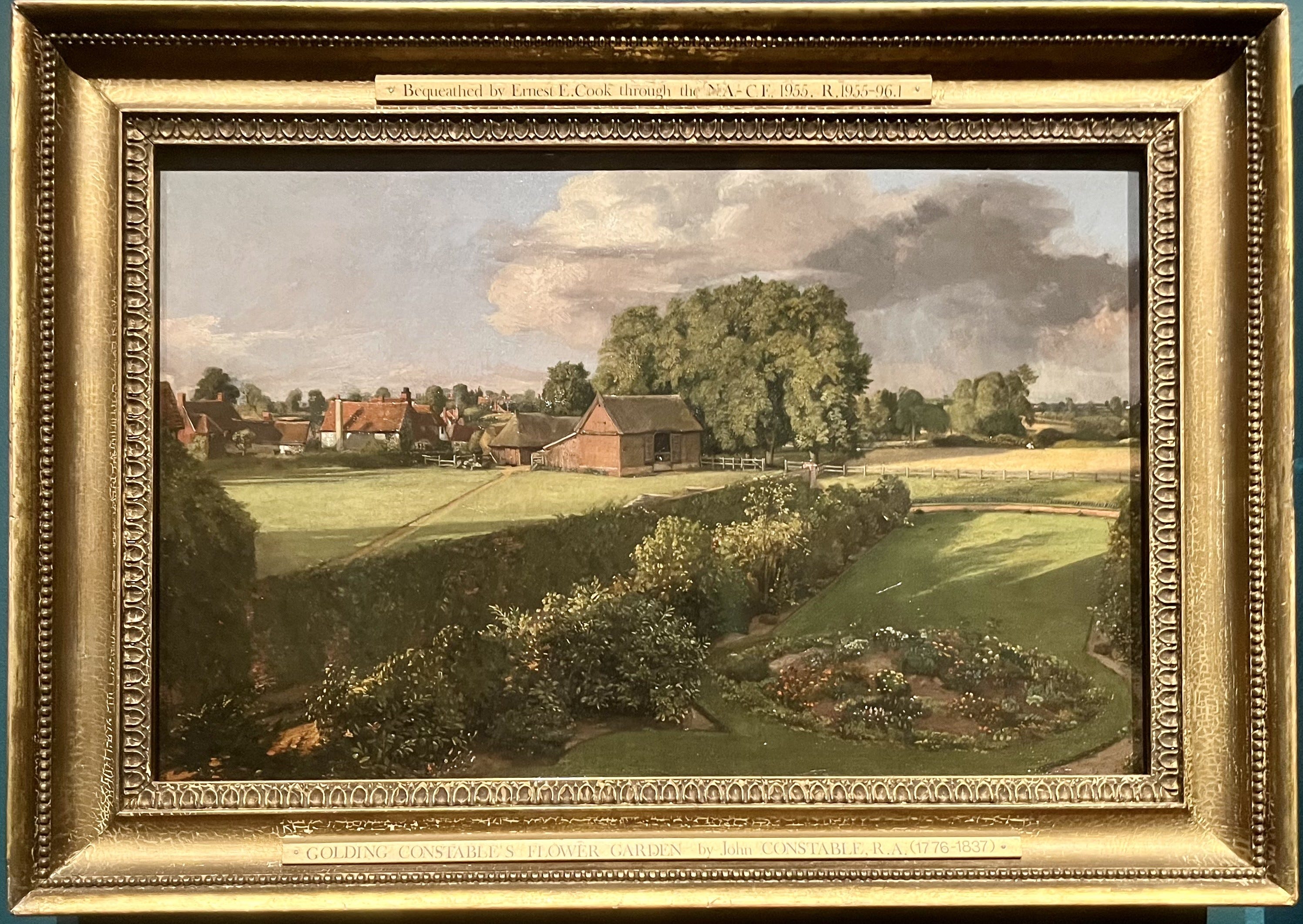
It sounds morbid but not a bit of it. Rather, they are painted with such particular purpose, there is a supreme sense of calm to them that encourages a long look.
So, eastward bound is my recommendation. There’s trains from Liverpool Street or you can go by bus - cheaper if a little more complicated. And in this, the 250th anniversesary of John Constable’s birth, what better way to explore the world that inspired his wonderful pictures? You could even stop for a pint on the way home.
Gainsborough's House:

Christchurch Mansion:

